Role
UX/UI Designer (Team of 3)
My contribution
Primary Maker for the Digital Keycard · Interviewer · Asset Collector
Duration
5 weeks (structured as a 5-day Design Sprint framework)
Team
Aishah (Facilitator) · Muzainah (Decider) · Me (Maker)
Tools
Figma
01 · Snapshot
In the wake of COVID-19 travel resurgence, The Ascott Limited's faced the challenge of meeting heightened traveller expectations.
The outcome
We redesigned the pre-arrival journey into four connected products. Usability testing with five participants resulted in overall experience ratings of 7–9/10, while the Digital Keycard I proposed as a native wallet integration emerged as the most well-received solution.
02 · The problem
The Ascott Limited faced the challenge of meeting heightened traveller expectations in the post-pandemic travel landscape. Our mission was to elevate the pre-arrival experience by reducing guest stress while creating a more engaging and personalised journey.
To align on a shared direction, we defined a long-term goal:
"In two years, The Ascott Limited will offer a best-in-class, personalised pre-arrival experience, making it the preferred choice for travellers."
We then brainstormed a list of killer questions, the biggest risks that could prevent us from achieving that goal. After a team vote, we selected one question to guide the sprint:
"Can we realistically meet the personalisation needs of every guest, given the high number of guests and limited hotel staff?"
This question shaped our design decisions throughout the project, which followed a 5-Day Design Sprint framework, spread across 5 weeks of weekly classes and independent work in between.
03 · What we did
Research
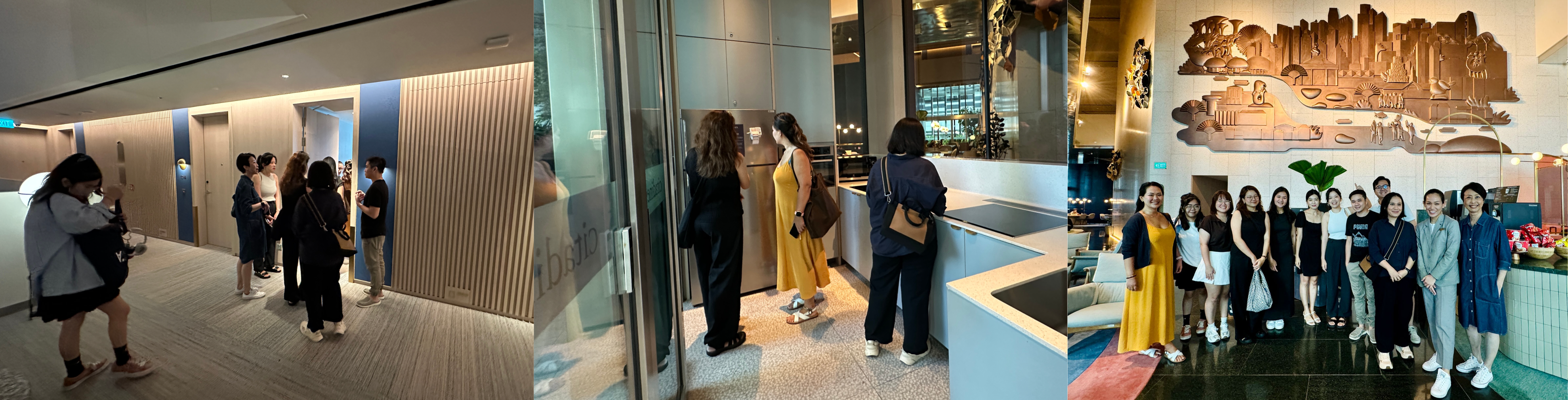
We ran a 45-minute "Ask the Expert" session with Irene, The Ascott Limited's Head of Customer Relations, who walked us through the existing pre-arrival process and flagged pain points like repetitive form-filling. We backed this up with informal feedback from friends and family who had stayed at Ascott properties, and a site visit to Citadines Raffles Place to see how pre-arrival touchpoints actually played out for staff on the ground.
Framing the problem
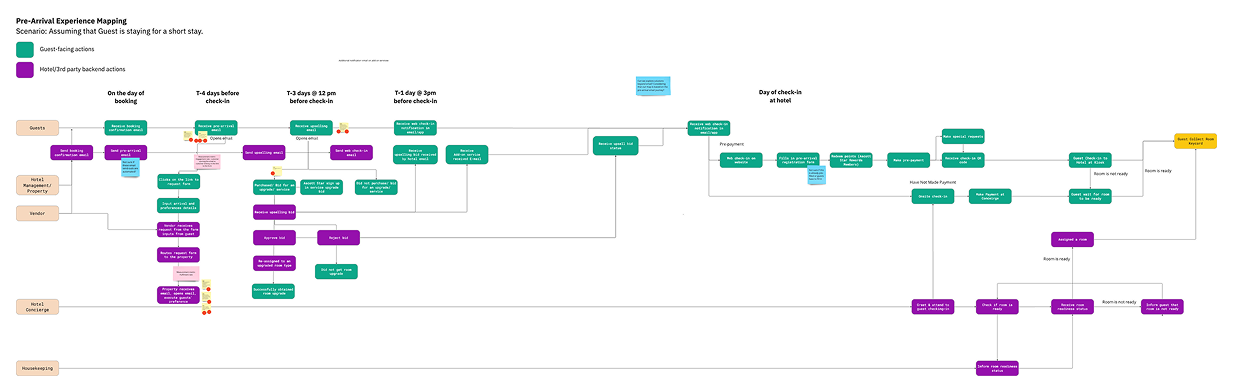
We mapped the guest journey from booking to check-in and translated insights from our user interview with Irene into "How Might We" questions. After dot voting, we identified the pre-arrival email and guest preferences form as our focus area. This led us to our guiding question:
"How might we create anticipation and excitement through pre-arrival touchpoints?"
Ideation
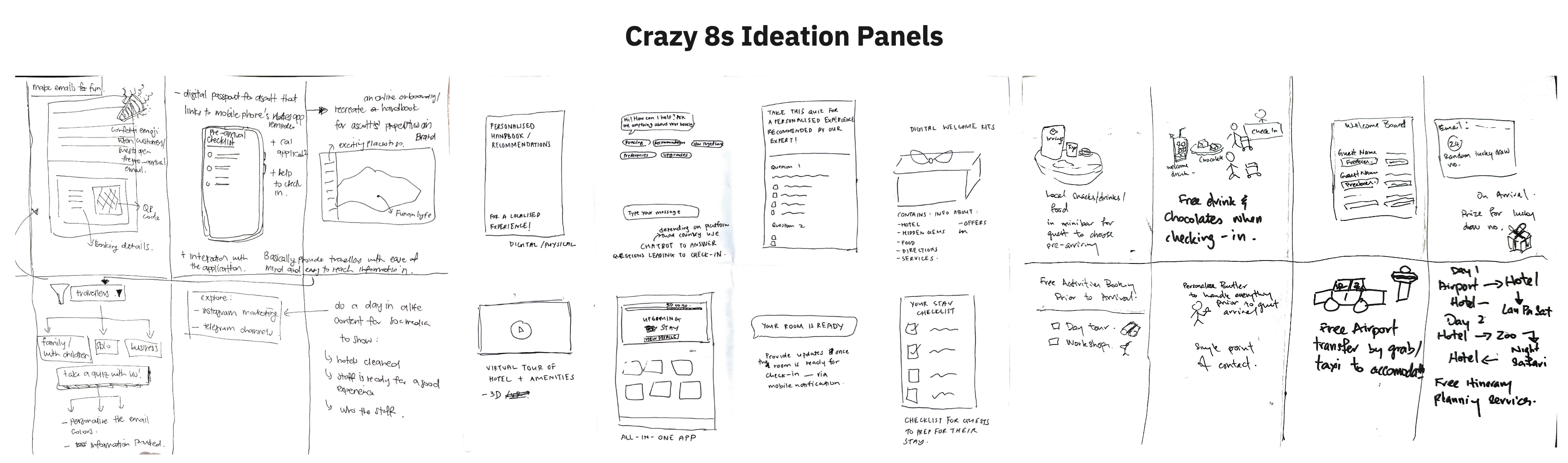
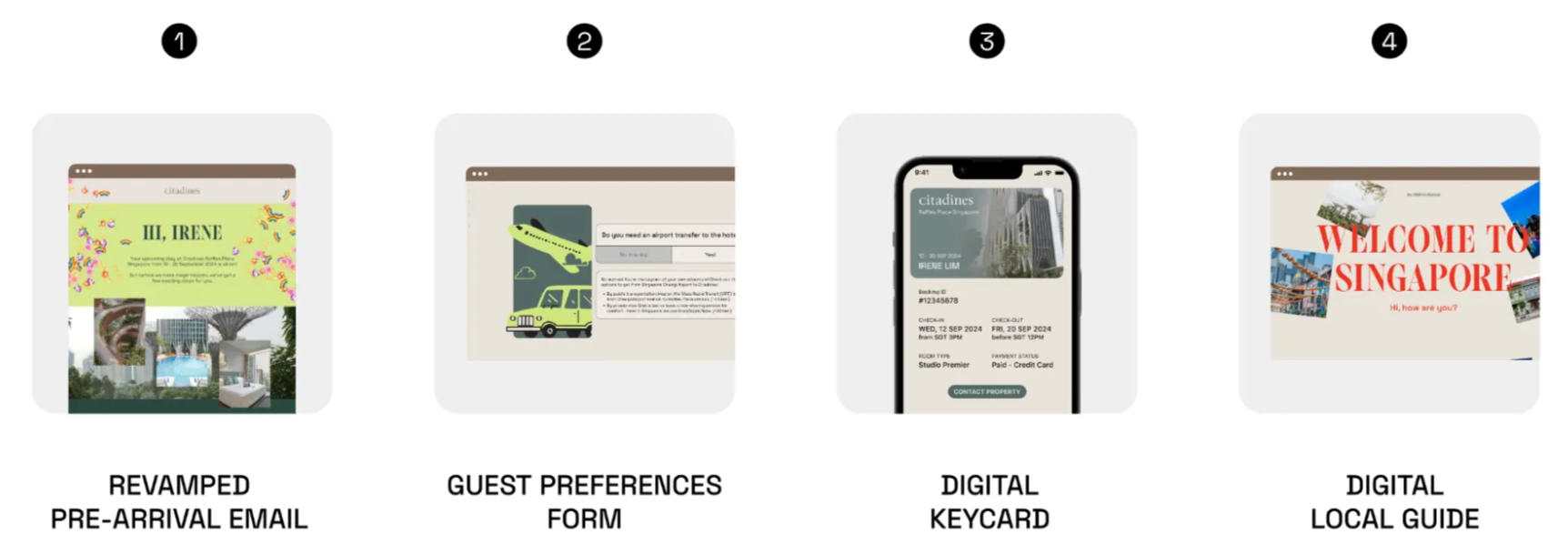
We conducted Lightning Demos, drawing inspiration from hospitality and other industries, including Airbnb's handmade host guides and Moom Health's personalisation quiz. Using Crazy 8s, each team member sketched eight ideas in response to our HMW question before narrowing them down through concept sketches and a heat map exercise. We ultimately shortlisted four concepts:
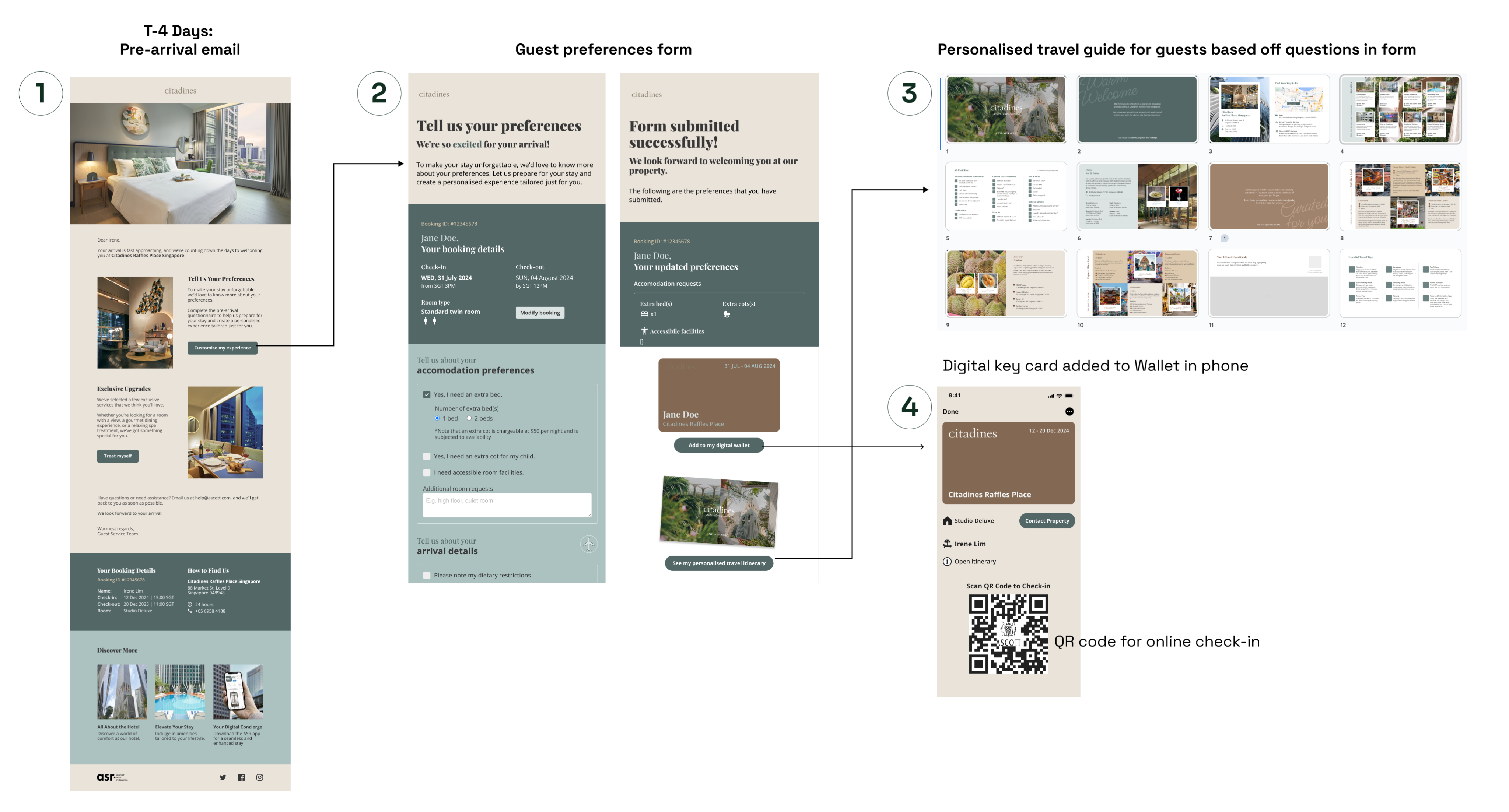
Playful pre-arrival email
Personalised guest preferences form
Digital keycard
Personalised local guide.
Building
Our initial prototype stayed close to Ascott's existing brand identity across all four products. During a mid-sprint critique, however, our module advisor challenged us to move beyond the corporate aesthetic and embrace a more playful direction. This shift shaped the final experience, inspiring celebratory confetti animations, a bolder colour palette, and a more expressive layout, most notably in the pre-arrival email, guest preferences form, and personalised local guide.
My role
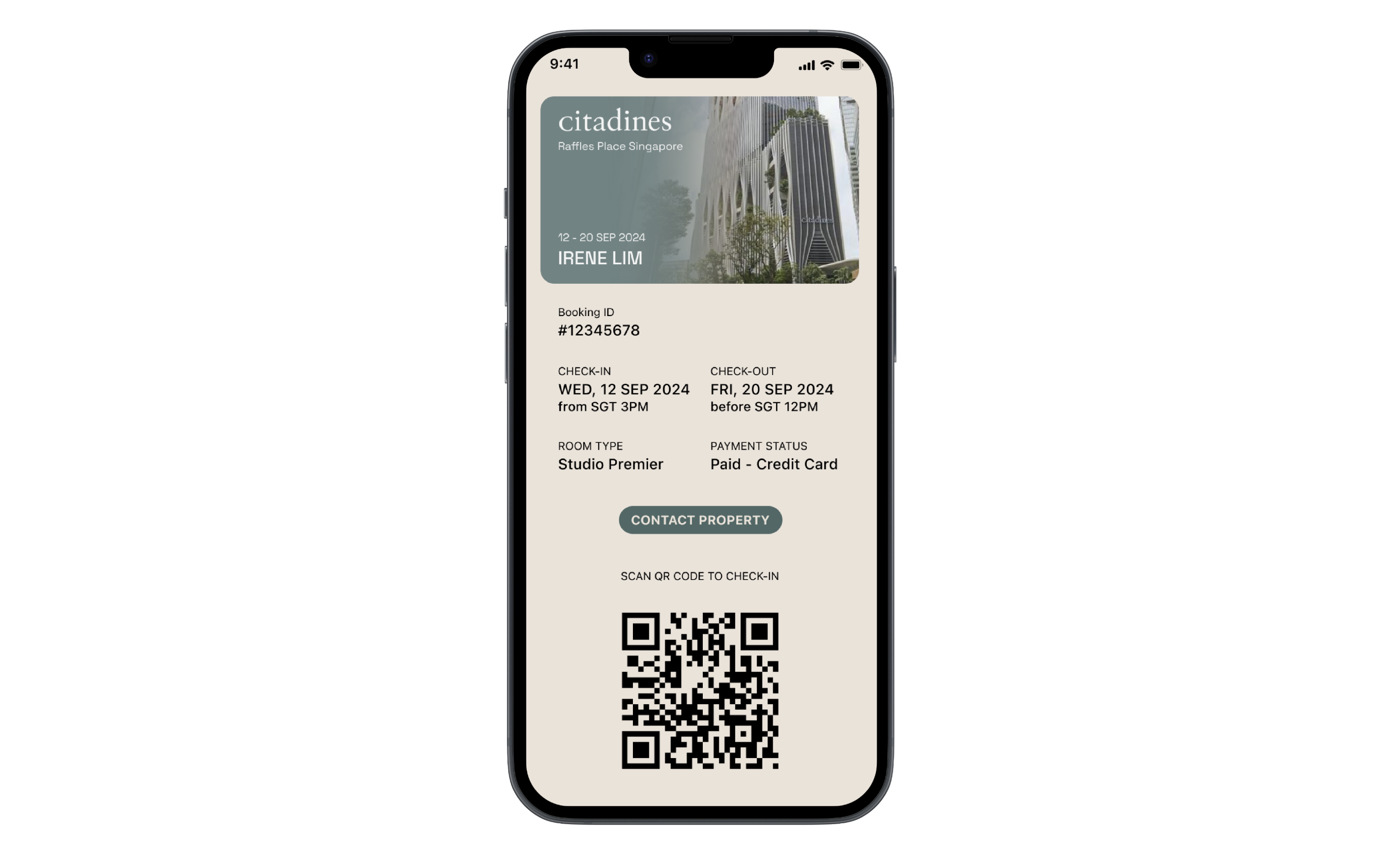
As the Primary Maker for the Digital Keycard, I proposed implementing it as a native Apple Wallet and Google Wallet pass with NFC room access, rather than as a standalone app. The team quickly aligned on the approach because it offered a simpler, more seamless experience.
My rationale was that guests shouldn't have to download a dedicated app just to access their room. A wallet pass could also expire automatically after checkout, reducing friction while improving convenience throughout the guest journey.
Validation
We tested the final prototype with five participants over Zoom. I alternated between interviewer and note-taker roles alongside a teammate across the sessions.
Participants rated the overall experience 7–9 out of 10, with the Digital Keycard emerging as the most well-received concept.
Testing also uncovered an important limitation: hotels still need to verify guests' passports at check-in. While the Digital Keycard couldn't eliminate the front-desk visit entirely, it could streamline the process by reducing the time guests spend there.
04 · The result
This was a module project rather than a shipped product, so the findings below are based on usability testing rather than live usage data.
Participants' response
All 5 test participants rated the experience 7–9/10, and specifically praised the Digital Keycard's convenience and the preferences form's clarity.
Limitation
Testing confirmed that passport verification still requires an in-person check-in. While the Digital Keycard reduced friction by streamlining the process, it could not eliminate the front-desk visit entirely. With the limited time available during the sprint, we weren't able to explore solutions for this operational constraint.
05 · Reflection
The most pivotal moment of the sprint came during our mid-sprint critique. Our module advisor challenged us to either stay true to Ascott's corporate brand or fully embrace a more playful direction. Until then, we had been playing it safe. That external perspective gave us the confidence to commit to a bolder visual language, ultimately shaping the personality of the final prototype.
From my perspective, proposing the wallet-based Digital Keycard was a straightforward decision. The team aligned on the idea quickly because it addressed a clear user need: guests could access their room without downloading a dedicated app, while the pass could automatically expire after checkout. Although the idea wasn't heavily debated, usability testing later validated the decision, with the Digital Keycard emerging as the most well-received concept.
Looking back, the biggest unresolved challenge was passport verification. Testing highlighted that guests still needed to visit the front desk to complete identity checks, meaning the Digital Keycard streamlined, but couldn't replace, the check-in process. Addressing this operational constraint was beyond the scope of the sprint, but it's the area I would prioritise exploring further, as it represents a real-world limitation that a digital solution alone cannot fully solve.